Sommaire
32V Ciliao 次髎

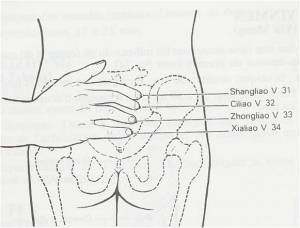

1. Dénomination
1.1. Traduction
| 次髎 Cìliáo | Deuxième trou (Nguyen Van Nghi 1971, Lade 1994) Deuxième trou de l'os (Pan 1993) Second trou sacré (Laurent 2000) |
|---|
- Zhou Mei-sheng 1984 : ci second; second to the uppermost. liao bone crevice; deep hole adjacent to bone.
- Ci : secondaire (Pan 1993); (Ricci 5414) : ordre, degré, rang, place (Guillaume 1995) ; second 二 souffle 欠 (homme surmonté d'une bouche ouverte vers l'avant) : ce qui vient en second, étape (où l'on reprend son souffle) (Laurent 2000).
- Liao : trou dans un os (Pan 1993); caractère inusité qui signifie « os » (Guillaume 1995) ; creux osseux… Cf. 12GI zhouliao (Laurent 2000).
1.2. Origine
- Jia yi jing (Guillaume 1995).
1.3. Explication du nom
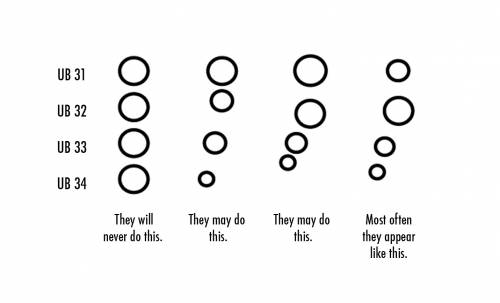
- Zhou Mei-sheng 1984 : Shangliao There are eight points of Liao in the holes of the sacrum, four right and four left. According to their order of position, they are respectively named Shangliao (the uppermost Liao), Ciliao (32V second or second to the uppermost Liao), Zhongliao (33V the middle Liao) and Xialiao (34V; the lower Liao).
- Lade 1994 : le nom fait référence à un groupe de points bilatéraux localisés dans les trous sacrés : V-31 (trou supérieur), V-32 (deuxième trou), V-33 (trou moyen) et V-34 (trou inférieur). On les étudie de manière groupée car ils ont des fonctions semblables.
1.4. Noms secondaires
1.5. Translittérations
1.6. Code alphanumérique
- VE33, 32V, 32VE (Vessie)
- BL 32, B32, Bladder 32 (Bladder)
- UB32 (Urinary bladder)
2. Localisation
2.1. Textes modernes
- Nguyen Van Nghi 1971 : Dans le deuxième trou sacré.
- Roustan 1979 : dans le deuxième trou sacré.
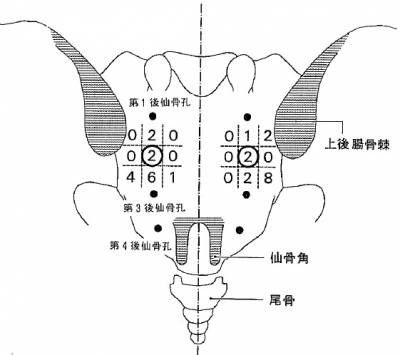
- Lu HC 1985 : Location-1 : On inferior-medial side of posterior superior iliac spine, 8 fens away from posterior median line. Location-2 : On the 2nd posterior sacral foramen and on midpoint between lower end of posterior superior iliac spine and the median line. How-to-locate-1 : see B31. How-to-locate-2 : see B31.
- Deng 1993 : Sur le sacrum, à l'intérieur et en-dessous de l'épine iliaque postéro-supérieure, juste au niveau du deuxième trou sacré.
- Pan 1993 : Ciliao est situé dans le deuxième trou sacré.
- Guillaume 1995 : Dans le deuxième trou sacré postérieur, en dedans de l'épine iliaque postéro-supérieure, à 1 distance environ en dehors de la ligne médiane postérieure.
- Laurent 2000 : sur le sacrum, en dedans et au-dessous de l'épine iliaque postéro-supérieure, dans le 2° trou sacré.
- WHO 2009: In the sacral region, in the second posterior sacral foramen. Note: The second posterior sacral foramen is located in the depression, midway between the posterior superior iliac spine and the spinous process of the second sacral vertebra.
2.2. Textes classiques
- Jin Yi : Dans la dépression qui se forme à l'extérieur de la colonne vertébrale, dans le deuxième trou (Deng 1993).
- Xun Jing : A 0,5 cun à l'extérieur de la dix-huitième vertèbre (Deng 1993).
- Feng Yuan : Au-dessous de la dix-neuvième vertèbre et dans la deuxième dépression à côté de la colonne vertébrale (Deng 1993).
- Ji Cheng : Au-dessous de Shangliao (V31), et à l'extérieur de Pangguangshu (V28) (Deng 1993).
- Deng 1993 : ce point est localisé au niveau du deuxième trou sacré, mais Xun Jing expliqua: qu'il se situe “à 0,5 cun à l'extérieur du bord inférieur de la dix-huitième vertèbre”. Or, selon cette définition, le point ne peut évidemment pas se trouver dans le deuxième trou sacré. Les définitions données dans Ji Cheng et Fang Yuan sont conformes à celle de Jia Yi. Le point est donc localisé sur le sacrum, à l'intérieur et au-dessous de l'épine iliaque postéro-supérieure, au niveau du deuxième trou sacré.
2.3. Rapports et coupes anatomiques
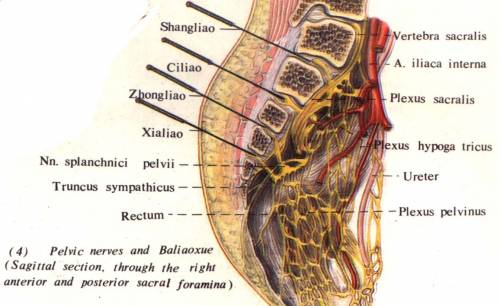
- Roustan 1979 : 2ème nerf sacral, avec artère et veines accompagnatrices.
- Deng 1993 : Peau—tissu sous-cutané—muscle érecteur épineux—deuxième trou sacré postérieur. Dans la couche superficielle, on trouve le nerf moyen de la fesse. Dans la couche profonde, on trouve les branches postérieures du deuxième nerf sacré, de l'artère et de la veine sacrées externes.
- Guillaume 1995 : Artères et veines sacrées latérales. Branche dorsale de S1.

Discussion des méthodes de localisation..
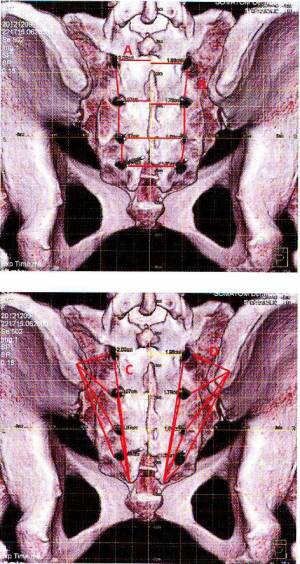

- Tian J, Song H, Xiao Y. [Exploration of anatomical location of Baliao points of adult female]. Zhongguo Zhen Jiu. 2016;36(4):384-6. [186707].
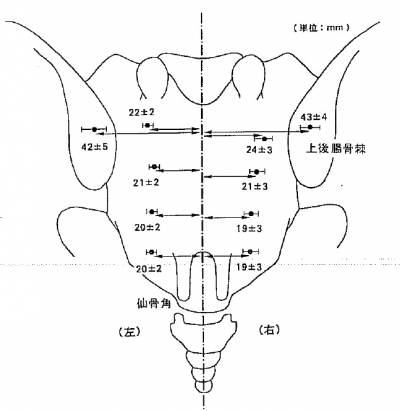
Fifteen morphologically and structurally complete sacrum specimens of normotrophic adult females were choosen. Distances between posterior sacral foramina and median sacral crest,and between the cores of adjacent posterior sacral foramina were measured. Then statistical analysis was done so as to provide objective anatomical evidence for the surface localization of Baliao points. The average distance between Shangliao (BL 31) and median sacral crest was (2.08 ± 0.19) cm; and the average distance between Ciliao (BL 32) and median sacral crest was (1.75 ± 0.12) cm; Zhongliao (BL 33), (1.59 ± 0.15) cm; Xialiao (BL 34), (1.56 ± 0.15) cm. And the distance of S₁-S₂ was (2.36 ± 0.31) cm averagely; S₂-S₃, (1.98 ± 0.23) cm; S₃-S₄, (1.71 ± 0.18) cm. It is considered that to locate Baliao points, Ciliao (BL 32) needs to be ascertained firstly.
- Zhou HF, Ding SQ, Ding YJ, Wang Ll, Wang J, LI M, Cao JB, Yang X. [Study on the measurement and locating of baliao points (eight sacral foramina)]. Chinese Acupuncture and Moxibustion. 2013;33(8):703-7. (chi). [162462]
OBJECTIVE: To seek the problems of position, measuring and locating methods of Baliao points (posterior sacral foramina) in modern researches. METHODS: Using Baliao (eight sacral foramina), Shangliao(BL 31), Ciliao(BL 32), Zhongliao(BL 33), Xialiao(BL 34), Dihoukong (posterior sacral foramina), Dikong (sacral foramina) and Digu(sacrum) as the key words, literature in the database of the CNKI from 1957 to 2012 were re trieved and analyzed. RESULTS: Problems were found in the past researches including limited numbers of relative literature, disunity of the measurement targets, complicated terms of indices, disunity of the starting and ending point of measurement, unclear weight of indices, deviation of results, lacking of combination with clinical practice and variety of locating methods. CONCLUSION: Position of Baliao points (eight sacral foramina) are clear. However, the locating methods are blurred and vary a lot. Study on living body has more significance for measurement and researches. Factors of gender, body weight, height and childbearing should also be taken into consideration. Therefore, it is necessary to find a more accurate and easier way of locating.
- Wang R, Song YF, Zhang WJ, Ye YQ. [The Location of Ciliao (BL 32) Acupoint By Three-Dimensional Reconstruction of Computed Tomography in Women]. Acupuncture Research. 2010;35(4):307-10. [156550].
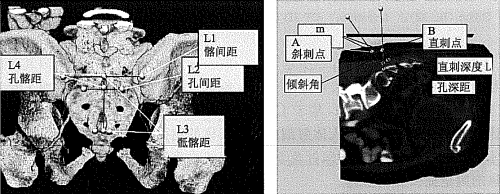 Pelvis (left) and schematic diagram (right) showing the coordinate measurement of Ciliao (BL 32),and the suitable depth and angle for straight needling and oblique needling. Wang 2010.
OBJECTIVE: To determine the location of Ciliao (BL 32) by the help of three-dimensional (3-D) surface reconstruction of computed tomography (CT) so as to provide a reference for clinical application.METHODS: A total of 106 female volunteer subjects were enrolled in the present study. A CT scanner was used to scan the subjects' pelvis, and the collected image data was processed by Dextroscope workstation. The distances and angels of Ciliao (BL 32) in the 3-D space were measured.RESULTS: A linear correlation existed between the inter-iliac distance (L 1) and sacro-foremen distance (L 2, with the regression equation being Y = 20.219 + 0.25X), and between the sacro-iliac distance and sacral foremen-iliac distance (with the regression equation being Y = -14.007 + 0.446X), which were used to determine the location of BL 32. A linear correlation also existed between the body weight and the needling depth (with the regression equation being Y = -18.893 + 0.988X). So, the suitably inserted straight depth of acupuncture needle could be determined according to the woman's body weight. The oblique angle of the 2nd sacral foremen was (30.08 +/- 4.26), and the depth of the 2nd sacral foramen was (20.13 +/- 2.11) mm.CONCLUSION: In accordance with the results obtained from CT 3-D reconstruction, oblique needling of an acupuncture needle for Ciliao (BL 32) is highly recommended.
- Masanori Kaneda et al. [Anatomical consideration of the acupuncture to the dorsal sacral foramina]. Journal of the Japan Society of Acupuncture. 1989;39(2):203-11. (jap). [83025]
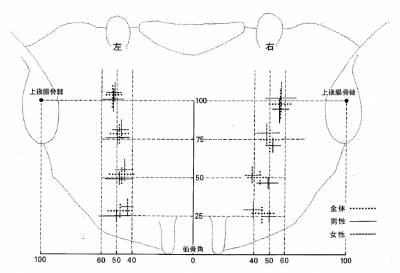
The positional relation between the dorsal sacral foramina and a needle inserted in the point “T, ze-Liao” according to the method of Takenouchi-Hamazoe, and the proJection positions of the respective foramina to the body surface were anatomically and bilaterally examined using fifteen cadavers. The results were as follows. (1) The needles inserted in the point “T, ze-Liao” missed the second dorsal sacral foramen caudally or latero-caudally in many cases. (2) In the mediolateral direction, the first to fourth dorsal sacral foramina were located in the middle zone between the dorsal median line and the posterior superior iliac spine. (3) In the rostro-caudal direction, the first dorsal sacral foramen were approximately located at the same level as that of the posterior superior iliac spine. The second to fourth foramina corresponded to three points which divided the rostro-caudal distance between the posterior superior iliac spine and the sacral cornua equally into four.





2.4. Rapports ponctuels

3. Classes et fonctions
3.1. Classe ponctuelle
- Nguyen Van Nghi 1971 : Voir Chang Liou (31V).
3.2. Classe thérapeutique
- Roustan 1979 : traite le réchauffeur inférieur, tonifie les lombes.
- Pan 1993 : le traitement par ces quatre points, Shangliao (31V), Ciliao (32V), Zhongliao (33V) et Xialiao (34V), a à peu près le même effet thérapeutique : régulariser le Foyer inférieur, fortifier les lombes et les genoux, débloquer la stagnation du Qi et Xue dans les Jing Luo.
- Guillaume 1995 : ciliao perméabilise les méridiens, harmonise le Qi, vivifie le Sang, calme les douleurs.
- Laurent 2000 : renforce les lombes et les genoux, tonifie les Reins, disperse chaleur/humidité, élimine vent/humidité, favorise la circulation du sang, aide les menstruations, augmente les contractions pendant l'accouchement.
4. Techniques de stimulation
| Acupuncture | Moxibustion | Source |
|---|---|---|
| Selon Tong ren, puncturer à 0,3 distance | Appliquer 7 cônes de moxa | Zhen jiu ju ying (Guillaume 1995) |
| Puncture perpendiculaire entre 1 et 1,5 distance de profondeur | Cautérisation avec 3 à 7 cônes de moxa, moxibustion pendant 5 à 15 minutes | Guillaume 1995 |
| Piqûre perpendiculaire à 1-2 distances | Cautériser 3-7 fois, chauffer 5-20 minutes | Roustan 1979 |
| Piqûre perpendiculaire de 1 à 1,5 cun | Moxas : 7 à 15 ; chauffer 20 à 40 mn | Laurent 2000 |
Sensation de puncture
- Roustan 1979 : sensation locale de gonflement.
Sécurité
Discussion sur la technique de puncture
- Cai HH, Wang LL. [Deep Acupuncture at Baliao Points (Eight Sacral Foramina) by Professor Wang Ling-Ling and its Clinical Application]. Chinese Acupuncture and Moxibustion. 2014;34(3):285-8. [182067].
With deep acupuncture at Baliao points (eight sacral foramina) as the core, Professor WANG Ling-ling has treated diseases of urinary, digestive and reproductive systems with superior therapeutic effect. The key for efficacy of Baliao points is deep acupuncture. Only deeply insert into acupoints with long needles and directly stimulate at sacral nerves, could Baliao points play a superior role in treatment effect. Searching acupoints is the basis of deep acupuncture, and superficial anatomy should be combined to summarize the methods of searching Baliao points. The premise of deep acupuncture is needling manipulation. The angles of needles must be adjusted according to morphological features of posterior sacral foramina, or it is hard to practice deep acupuncture into Baliao points. The description of location and manipulation on Baliao points in ancient and modern literature was vague, which restricts clinical application of Baliao points. A lot of research on location, manipulation and clinical application of Baliao points has performed by Professor WANG Ling-ling, and its manipulation and clinical cases are introduced to make a positive effect on its application and popularization.
- Leow MQH, Cui SL, Mohamed Shah MTB, Cao T, Tay SC, Tay PKC, Ooi CC. Ultrasonography in Acupuncture-Uses in Education and Research. J Acupunct Meridian Stud. 2017 Jun;10(3):216-219.[171808]
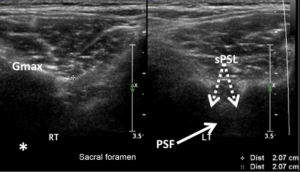 Location of acupuncture needle insertion. Transverse dual-view ultrasound image of bilateral BL32 acupuncture points demonstrating sonographic anatomy at the level of bilateral second PSF. Calipers measure linear distances from skin to second PSF on each side.The hypoechoic left second posterior sacral foramen (white solid arrow), echogenic left sPSL (dotted white arrow), right gluteal maximus (Gmax), and right bony sacrum (*) are indicated. PSF = Posterior Sacral Foramina; RT = right; sPSL = short posterior sacroiliac ligament.
This study aims to explore the potential use of ultrasound in locating the second posterior sacral foramen acupuncture point, quantifying depth of insertion and describing surrounding anatomical structures. We performed acupuncture needle insertion on a study team member. There were four steps in our experiment. First, the acupuncturist located the acupuncture point by palpation. Second, we used an ultrasound machine to visualize the structures surrounding the location of the acupuncture point and measure the depth required for needle insertion. Third, the acupuncturist inserted the acupuncture needle into the acupuncture point at an angle of 30°. Fourth, we performed another ultrasound scan to ensure that the needle was in the desired location. Results suggested that ultrasound could be used to locate the acupuncture point and estimate the depth of needle insertion. The needle was inserted to a depth of 4.0 cm to reach the surface of the sacral foramen. Based on Pythagoras theorem, taking a needle insertion angle of 30° and a needle insertion depth of 4.0 cm, the estimated perpendicular depth is 1.8 cm. An ultrasound scan corroborated the depth of 1.85 cm. The use of an ultrasound-guided technique for needle insertion in acupuncture practice could help standardize the treatment. Clinicians and students would be able to visualize and measure the depth of the sacral foramen acupuncture point, to guide the depth of needle insertion. This methodological guide could also be used to create a standard treatment protocol for research. A similar mathematical guide could also be created for other acupuncture points in future.

5. Indications
| Classe d'usage | ★ | point courant |
|---|
5.1. Littérature moderne
- Nguyen Van Nghi 1971 : Point à puncturer spécialement dans les cas de : pathologie génito‐urinaire, règles irrégulières, lombosciatique, troubles mentaux.
- Roustan 1979 : affections du sacrum, douleurs sciatiques, leucorrhée, affections du petit bassin, troubles des règles, orchite, paralysie des membres inférieurs, séquelles de poliomyélite.
- Lade 1994 :
- Régularisent le Réchauffeur Inférieur et les menstruations, transforment la Chaleur-Humidité (surtout du Réchauffeur Inférieur), stabilisent l'Essence, vivifient le Sang, et favorisent la miction. Indications : stérilité, impuissance, règles irrégulières, dysménorrhée, inflammation ou douleur de l'ovaire, leucorrhée, spermatorrhée, orchite, rétention d'urine, miction difficile par infection, irritation de la peau dans la région génitale, inflammation utéro-vaginale, péritonite, diarrhée et constipation.
- Fortifie les lombes. Indications : engourdissement des lombes et du pied, paralysie des membres inférieurs, douleur et raideur des lombes et du sacrum, et sciatique.
- Fait remonter le Qi. Indications : fissures anales, hémorroïdes, et prolapsus utéro-vaginal.
- Active le travail. Indications : travail difficile ou retardé lors de l'accouchement.
- Guillaume 1995 : Douleur lombo-sacrée, pertes blanches et rouges, irrégularités menstruelles, menstruations douloureuses, stérilité, dysurie, diarrhée liquide, constipation, hémorroïdes, Qi herniaire-shan qi ; sciatalgie, vaginite, rétention d'urine, paraplégie.
5.2. Littérature ancienne
- Jia yi jing : « Lombalgie avec impossibilité de se pencher ou de se redresser, impotence fonctionnelle ou faiblesse des membres inférieurs à partir des lombes, froid qui pénètre jusque dans la colonne dorso-lombaire », « Leucorrhées rouges et abondantes, ballonnement et stagnation en dessous du Cœur » (Guillaume 1995).
- Qian jin yao fang : « Baisse de la force musculaire des membres inférieurs » (Guillaume 1995).
- Ishimpo : Lombalgie ; tristesse ; impossibilité de se pencher ou de se redresser ; engourdissement des lombes jusqu'aux pieds ; ballonnement et stagnation au-dessous du Cœur ; liquide blanchâtre dans les urines (Guillaume 1995).
- Tong ren : « Qi herniaire qui descend, douleur de la colonne lombaire avec impossibilité de se retourner, contracture qui irradie vers la région génitale avec douleur insupportable, dysurie et hématurie » (Guillaume 1995).
- Zhen jiu ju ying : difficulté de défécation et de miction, lombalgie avec limitation de la rotation, froid de la peau du dos, urines rouges, ballonnement ferme sous le Cœur (épigastre ferme et ballonné ), hernie inguino-scrotale, faiblesse des membres inférieurs, douleur du souffle Yin-yin qi tong, borborygmes avec diarrhée, hémiplégie-pian feng, pertes blanches et rouges » (Guillaume 1995).
- Yi xue ru men : « Impotence fonctionnelle des membres inférieurs qui s'étend depuis les lombes, crainte du froid, pertes blanches et rouges, ballonnement et accumulation au-dessous du Cœur, difficulté de miction et de défécation, chute du Qi herniaire » (Guillaume 1995).
- Da cheng : « Dysurie-lin rouge, douleur lombaire avec difficulté de rotation, contracture qui irradie vers les organes génitaux avec douleur insupportable, faiblesse de la moitié inférieure du corps depuis les lombes, froid du dos, urines foncées, ballonnement ferme au-dessous du Cœur, Qi herniaire qui descend, faiblesse des membres inférieurs, Qi douloureux (gaz), diarrhée liquide et borborygmes, hémiplégie, leucorrhées rouges » (Guillaume 1995).
- Lei jing tu yi : « Difficulté de défécation, dysurie avec écoulement blanchâtre ou rougeâtre, ballonnement, et sensation de fermeté au-dessous du Cœur, lombalgie et froid des pieds, descente du Qi herniaire qui provoque des douleurs génitales intolérables, borborygmes avec diarrhée, pertes blanches et rouges (Guillaume 1995).
5.3. Associations
| indication | association | source |
|---|---|---|
| Hémorroïdes | 32V + 1VG + 35V + 57V + Er bai- PC 24 (Si ban jiao cai ) | Zhen jiu xue (Guillaume 1995) |
| Vaginite | 32V + 3VC + 12Rn + 10Rte + 6Rte + 4F | Zhong guo zhen jiu xue (Guillaume 1995) |
| Stérilité | 32V + 1Rn + 5Rte | Zi sheng jing (Guillaume 1995) |
| Lombalgie avec crainte du froid | 32V + 53V + 56V | Qian jin (Guillaume 1995) |
| Incontinence ou rétention d'urine | 32V + 39V + 3VC | Shanghai zhen jiu xue (Guillaume 1995) |
5.4. Revues des indications
- Long ZL, Liu ZS. [Brief analysis on main indications and compatibility rules of Ciliao (BL 32) based on data mining]. Zhongguo Zhen Jiu. 2022 Apr 12;42(4):459-63. doi.
Based on the data mining technology, the main indications and compatibility rules of Ciliao (BL 32) were analyzed and summarized. The relevant literature was retrieved from the databases of CNKI, Wanfang, VIP, Cochrane Library, SinoMed, Scopus, Web of Science, EMbase and PubMed, from the date of establishment to September 8, 2021. Using the software of SPSS Modeler 18.0 and Gephi0.9.2, the included literature was analyzed by data mining. A total of 218 articles were included, of them, there were 36 articles using single-acupoint prescriptions and 182 articles using compound prescriptions. Acupuncture was the most frequently used intervention of Ciliao (BL 32), followed by electroacupuncture. Dysmenorrhea and labor analgesia were the dominant indications of single-acupoint prescriptions of Ciliao (BL 32), and 9 diseases i.e. dysmenorrhea, urinary incontinence, urinary retention, chronic pelvic inflammatory disease, chronic prostatitis and lumbar disc herniation were the dominant indications of compound prescriptions. The main indications of Ciliao (BL 32) involved diseases of reproductive system, urinary system and waist. There were 92 acupoints in compatibility with Ciliao (BL 32), which were main belonged to the bladder meridian, the conception vessel and the spleen meridian, the most frequently used acupoints were Sanyinjiao (SP 6), Guanyuan (CV 4), Shenshu (BL 23) and Zhongji (CV 3).
- Shi Xiao-Lan, Yu Shu-Guang, Zhang Cheng-Shun. [Exploring Theoretical Basis of TCM on Combination of Moxibustion with Pushing Manipulation at Baliao Point in the Treatment of Gynecological Diseases]. Journal of Clinical Acupuncture and Moxibustion. 2014;30(30):38. [173610].
Moxibustion belongs to the pure Yang in nature and has the double functions of warrn dredging and supplementatiori. Pushing manipulation can dredge Meridians and promote the circulation of Qi and invigorate the blood. Combination of them at Baliao point as a clinical treatrnent for gynecological diseases has a significant effect. The article discusses the theory of Baliao point for treating gynecological diseases by rneans of moxibustion and pushing nianipulation in order to provide some ideas for the clinical treatment of similar diseases.
- Wang Ling. An Exploration of Eight-Liao Points. . Journal of Traditional Chinese Medicine. 1995;15(3):195-7 . [54643]. Traduction italienne [57766]
- Cai HH, Wang LL. [Deep Acupuncture at Baliao Points (Eight Sacral Foramina) by Professor Wang Ling-Ling and its Clinical Application]. Chinese Acupuncture and Moxibustion. 2014;34(3):285-8. [172098].
With deep acupuncture at Baliao points (eight sacral foramina) as the core, Professor WANG Ling-ling has treated diseases of urinary, digestive and reproductive systems with superior therapeutic effect. The key for efficacy of Baliao points is deep acupuncture. Only deeply insert into acupoints with long needles and directly stimulate at sacral nerves, could Baliao points play a superior role in treatment effect. Searching acupoints is the basis of deep acupuncture, and superficial anatomy should be combined to summarize the methods of searching Baliao points. The premise of deep acupuncture is needling manipulation. The angles of needles must be adjusted according to morphological features of posterior sacral foramina, or it is hard to practice deep acupuncture into Baliao points. The description of location and manipulation on Baliao points in ancient and modern literature was vague, which restricts clinical application of Baliao points. A lot of research on location, manipulation and clinical application of Baliao points has performed by Professor WANG Ling-ling, and its manipulation and clinical cases are introduced to make a positive effect on its application and popularization.
- Qian Xiaoyan. Clinical Application of Ciliao in Acupuncture Treatment. Journal of TCM. 1999;19(2):126-8. [72272]. Traduction espagnole : Qian Xiao Yan. Aplicacion clinica del punto V32 (Ciliao) en el tratamiento con acupuntura. El Pulso de la Vida. 1988;20:27-8. [73208]. Traduction italienne : Quian Xiaoyan. Uso clinico di ciliao nel trattamento con agopuntura. Rivista Italiana di Medicina Tradizionale Cinese. 2000;80(2):58. [89553].
- Wang Zongxue et al. Clinical Application of Ciliao Point (BL32) combined with other Appropriate Points (Abstract). Acupuncture Research. 1994;19(3-4):164-5. [85229].
6. Etudes cliniques et expérimentales
6.1. Baliao
6.1.1. Constipation
- Zou YY, Ding SQ, Zhou HF, Ye JJ, Xu XZ, Hu GY, Zhang JB. [Development of Researches on the Underlying Mechanism of Acupuncture Stimulation of Baliao-points for Improving Outlet Obstruction Constipation]. Zhen Ci Yan Jiu. 2015;40(5):427-30. [182047].
Outlet obstruction constipation (OOC) is a common clinical problem affecting many people's daily life quality nowadays. Acupuncture therapy is effective in easing OOC to reduce patients' sufferings by stimulation of Baliao-points i. e., bilateral Shangliao (BL 31), Ciliao (BL 32), Zhongliao (BL 33) and Xialiao (BL 34), which has been confirmed repeatedly in clinical practice. In the present paper, the authors reviewed development of studies on the underlying mechanisms of acupuncture stimulation of Baliao-points for OOC from: 1) lowering the sensitivity of intraganglionic laminar nerve endings (rIGLEs) to rectal mechanical distension during defecation, 2) raising the level of circulating cholecystokinin (CCK) to improve the sensory threshold of the rectum, 3) lowering the excitability of γ-motor neurons in the spinal anterior horns controlling the slow contraction of the rectal sphincter muscle, 4) inhibiting the excitability of sympathetic output from the spinal lateral horns, 5) easing the tonic contraction of the pelvic muscles to reduce the release of 5-hydroxy tryptamine (5-HT), histamine, and other related chemical mediators due to local ischemia. Moreover, further study on the mechanism of acupuncture stimulation of Baliao-points underlying improving OOC may help up find more specific and effective therapeutic targets and provide more reliable experimental foundation and theoretical basis.
6.1.2. Aménorrhées
- Xu Li, Wang Wei. [Treatment of 38 Cases with Primary Amenorrhea by Acupoints Baliao]. Journal of Tianjin University of TCM. 2003;22(3):47. [118809].
6.1.3. Thrombocytopénie
- Xu Meixun. [25 cas de Thrombocytopenie traites par Moxibustion du 3VG et des Baliao]. Journal of New Chinese Medicine. 1983;15(1):34. [1504].
6.1.4. Rétention urinaire du paraplégique
- Zhou LY, Li J, Li CM, Yu ZG, Zhang WL, Zheng M, Meng QG, Wang FY, Sheng ZG. [Observation on Therapeutic Effect of Electroacupuncture at Points Baliao and Huiyang (BL 35) on Retention of Urine Induced by Spinal Cord Injury]. Chinese Acupuncture and Moxibustion. 2006;26(4):237-9. [125822].
OBJECTIVE: To explore a more effective therapy for retention of urine induced by spinal cord injury. METHODS: Eighty-four cases were randomly divided into a treatment group of 46 cases and a control group of 38 cases. The treatment group were treated with electroacupuncture at Baliao and Huiyang (BL 35), and the control group with electroacupuncture at acupoints routinely selected. RESULTS: The total effective rate and the cured rate were 82.6% and 43.5% in the treatment group and 63.2% and 23.7% in the control group respectively, with a very significant difference between the two groups (P < 0. 01). CONCLUSION: Electroacupuncture at Baliao and Huiyang (BL 35) has obvious therapeutic effect on retention of urine induced by spinal cord injury.
6.1.5. Lombalgie
- Gu Xudeng, Zhuan Jianming, Yao Yunmei. Electro-Acupuncture sur les Baliao dans le traitement de douleur lombaire : etude clinique sur 64 cas. Journal of Clinical Acupuncture and Moxibustion. 2005;21(4):47. [150659].
- Lu QW, Wang MY, Li QB, Wan YW, Shi DW, Liu ZX, Luo J, Luo CG. [Professor Luo Cai-Gui's Experience of Using Acupoint “Baliao” for Treatment of Low Back Pain]. Chinese Acupuncture and Moxibustion. 2014;34(12):1225-7. [183094].
Professor LUO Cai-gui's experience of acupuncture at acupoint “Baliao” with twisting manipulation for treatment of low back pain is introduced. This method has significant efficacy on improving low back pain and numbness of lower extremities, which is characterized with short-time manipulation, quick de-qi and long effective time. The acupuncture methods, manipulations, precautions, etc. are elaborated in details. A typical case is added.
6.1.6. Sciatalgie
- Guézenec X. Traitement des lombosciatalgies par les points Baliao. Acupuncture & Moxibustion. 2005;4(2):126-127. [140241].
6.1.7. Rétention urinaire
- Xudong G. Clinical Report on Treatment of Postoperative Urinary Retention with Acupuncture at “Four Liao” and Sanyinjiao Acupoints. American Journal of Acupuncture. 1994;22(4):349-51. [57242].
This study reports on twelve patients with postoperative urinary retention treated with acupuncture Utilizing acupoints Ciliao (BL-32) and Zhongliao (BL-33), bilaterally, combined with acupoint Sanyinjiao (SP-6). Treatment was effective and successful in the 12 patients (100%). The treatment methods are safe, easily mastered, effective and without side effects.
6.1.8. Dysfonction érectile
- Lun Xin et al. Clinical Study on Punturing Eight- Liao Points (BL31-34) with Stuck Needle Method in Treating Functional Impotence. Word Journal of Acupuncture-Moxibustion. 2000;10(1):25. [72217].
- Yang Lieyi. [Medicine Injection of Ba Liao Point Treating 59 Cases of Sexual Impotence]. Shandong Journal of TCM. 1995;14(11):504. [88331].
6.2. Etudes spécifiques concernant 32V Ciliao
6.2.1. Voies afférentes
- Gao Wenjun. [A Preliminary Investigation of the Segmental Distribution of Afferent Fibers in Acupoint Ziliao (BL-32) and Uterus with HRP Method]. Acupunture Research. 1988;13(2):144-49. [23347].
6.2.2. Analgésie chirurgicale
- Weng Jiayi et al. Application du point Ciliao (32v) modifie dans l'anesthesie acupuncturale pour les interventions chirurgicales en gynecologie. Mensuel du Medecin Acupuncteur. 1981;77:276. [1496]. Weng Jiayin et al. The Application of Modified “Ciliao” Point in Acupuncture Anesthesia for Gynecological and Obstetrical Operation. Acupuncture Research, Selected Abstracts, Beijing. 1984. 197. [23227].
6.2.3. Circulation des membres inférieurs
- Hisashi Kouda et al. [Effect of Low Frequency Electrical Acupuncture Stimulation to Ciliao (B-32) on the Peripheral Circulation of Lower Legs -Comparison of Ciliao to the other Acupuncture Points]. Journal of the Japan Society of Acupuncture. 1989;39(4):391-99. [83055].
For the purpose to increase peripheral blood flow of lower leg, low frequency electrical acu- puncture was applied to the various meridian points such as Ciliao (B-32), Sanyinjiao (Sp-6), Xuehai (Sp-10), Zusanli (S-36), Jiexi (S-41) and Xuanzhong (G-39) on the patients of Burger's disease and intractable ulcer of lower leg. Peripheral blood flow was measured by a laser doppler flow meter. The results show that blood circulation of lower legs was increased by electrical acupuncture stimulation on bilateral Ciliao more than the other points and it was suggested that electrical acupuncture for bilateral Ciliao was helpful adjuncts to the treatment of ischemic disease such as Burger's disease and intractable ulcer.
6.2.4. Constipation post-AVC
- Ma Zhe-He, Lin Guang-Hua. [Constipation after Stroke by Quickly Needling Ciliao combined with Regular Acupuncture]. Journal of Clinical Acupuncture and Moxibustion. 2013;29(9):7. [175390].
Objective : To investigate the efficacy of constipation after stroke byquickly needling Cilia', cornbined with regular acupuncture. Methods :60 cases of constipation after stroke were randomly divided into the treatment group (treated by quickly needling Ciliao combined with regular acupuncture with 30 cases) and the control group(treated bytraditional acupuncture , 30cases),ten days for a course. Clinical symptoms , constipation symptom score and colonic transit situation were observed after two courses of treatment. Results : After the treatment, the treatment group was better than the control group in the total effect. The difference was statistically significant (P<0.05).Both groups were inproved in constipation symptom score,and the difference was statistically significant between the two groups ( P <0. 05).Colonic transit was improved in numbers of barium bar, and the number of barium bar in the treatment group was less than that in the control group ( P<0.05). Conclusion:Quickly needling Ciliao combined with regular acupuncture can improve the symptoms and physical signs in constipation after stroke and can shorten its duration.his an effective treatment for constipation after stroke and is worthy of clinical use.
6.2.5. Règles irrégulières
- Zhang Zhisheng et al. [Radiation of He-Ne Laser at Ciliao Acupoints for Treatment of Irregular Menstruation]. Chinese Acupuncture and Moxibustion. 2000;20(3):139. [86212].
6.2.6. Dysmenorrhée
- Kong Yi, Bu Yan-qing, Du Yi-jun, Jia Hong-ling. [Comparative Study on the Therapeutic Efficacy of Acupuncture at Ciliao (BL 32) Versus Guanyuan (CV 4) for Primary 1213 Dysmenorrhea]. Shanghai Journal of Acupuncture and Moxibustion. 2016;35(2):172-174. [191323].
Objective To compare the analgesic specificity between Ciliao (BL32) and Guanyuan (CV4) in treating primary dysmenorrhea. Method Sixty patients with primary dysmenorrhea were randomized into Guanyuan group and Ciliao group. Visual Analogue Scale(VAS) was adopted to evaluate and compare the pain score right before needling, during the retaining of needles, and at several time points after the removal of needles. Result The two groups both can swiftly produce increasing analgesic effects after needling, and the effect in Ciliao group was more significant than that in Guanyuan group. The analgesic effect of Ciliao approached the peak value at 30 min after the removal of needles. Conclusion Ciliao can produce a more significant needling analgesic effect compared to Guanyuan.
6.2.7. Douleur du travail
- Liu Y, Xu M, Che X, He J, Guo D, Zhao G, Zhang G, Zhang S, Kang K, Zhang C, Wang Y, Li S, Zhang Q, Xu L, Zhang M, Han B, Jing Y, Zhang N. Effect of direct current pulse stimulating acupoints of JiaJi (T10-13) and Ciliao (BL 32) with Han's Acupoint Nerve Stimulator on labour pain in women: a randomized controlled clinical study. J Tradit Chin Med. 2015;35(6):620-5. [181854].
OBJECTIVE: To assess the clinical effect and safety of direct current (DC) pulse produced by Han's Acupoint Nerve Stimulator in reduction (HANS) of labor pain. METHODS: Totally 120 participants were enrolled in this clinical trial, and were randomly divided into 4 groups including: HANS group, patient controlled intravenous analgesia (PCIA) group, patient-controlled epidural analgesia (PCEA) group and control group. The HANS group was treated by stimulating the acupoints of JiaJi (T10-L3) and Ciliao (BL 32) with DC pulse of 100 Hz and 15-30 mA produced by a portable battery-powered Han's Acupoint Nerve Stimulator for 30 min. The PCIA group was intravenously infused Ondansetron (8 mg) for 5 min, then tramadol injection (1.5 mg/kg) was slowly dripped by using BaxterAP II electronic pump with 50 mL tramadol (0.70%) + ondansetron (8 mg), background infusion 2 mL/h, PCA dose of 2 mL, lockout interval of 10 min. In PCEA group, women received intrathecal injection ropivacaine (3 mg) in L2-3, and epidural catheter was connected to BaxterAP II electronic pump, with 100 mL Ropivacaine (0.1%) and Sufentanil (50 ug), background infusion 5 mL, Patient controlled analgesia (PCA) dose of 5 mL, lockout interval of 10 min. The control group was not received analgesia. The visual analogue scale (VAS), stage and manner of labor, Apgar score of newborn, neonatal weights, oxytocin dosage, postpartum hemorrhage and side effects were monitored in all groups. RESULTS: The vital signs were all stable in the four analgesic groups. After analgesia, there was statistical difference in VAS score between HANS group and control group, between PCEA group and the control group, between PCIA group and control group. The analgesic effect in the PCEA group was significantly better than that of other two groups. The second stage of labor in the PCEA group was longer than the other three groups, showing significant difference between them. The Apgar score of newborn 1 min after birth in the PCIA group was slightly lower than that of the other two groups, showing significant difference between them. The neonatal weights between four groups were not significantly different. The rate of cesarean section in the control group was significantly higher than that of the labor analgesia group, there was statistically difference in four groups. The number of PCIA group that used oxytocin was lower than that of other three groups. There was no significant difference in postpartum hemorrhage between four groups. The side effects of the PCEA group were itching, uroschesis and neonatal asphyxia and PCIA group were nausea and vomiting and neonatal asphyxia. However, fewer side-effects were observed in the HANS group. CONCLUSION: The DC pulse produced by HANS may be a non-pharmacological alternative to labor pain with fewer side effects.
- Huguet JB, Wibaut Puslecki H. Ciliao V32, Utilisation et impact durant le travail. A propos de 14 cas. Mémoire de DIU d'Acupuncture Obstétricale. Lille: Université du Droit et de la Santé. 2015. [190793].
6.2.8. Lombalgie
- Xiang L. Aqua-Injection at Ciliao (Bl32) for Treatment of 214 Patients with Pain of Loins and Leg. World Journal of Acupuncture-Moxibustion. 1995;5(2):29-31. [84743].
The aqua-injection at Ciliao (BL 31) point was used to treat 214 patients with pain of loins and legs, and among them 64 (29. 9%) cases were cured, 136 (63. 6%) were markedly improved and 12 (5. 6%) cases were improved with a total effective rate of 99. 1%.
6.2.9. Hernie discale lombaire
- Xueping-Wu. [Clinical Observation on Deeply Needling Ciliao (BL 32) for Treatment IVF Prolapse of Lumbar Intervertebral Disc]. Chinese Acupuncture and Moxibustion. 2007;27(3):182. [146086].
Objective To explore specificity of acupoints for treatment of prolapse of lumbar intervertebral disc, Methods One hundred and eighty cases were randomly divided into a treatment group '(n =120) and a control group (n=60). The two groups were treated with acupuncture, traction and massage therapy. For the treatment group, routine acupoints were selected and deeply needling Ciliao (lit, 32) were added. For the control group. only routine acupoints were needled. And other treatments were same in both the two groups. Results The total effective rate was 97. 5% a in the treatment group and 88. 3 ° o in the control group, with a significant difference between the two groups (P<0. 05); after following survey of a half year, the recurrence rate was 8. 6% in the cream tent group and 20. 8% in the control group, with a significant difference between the twb groups (P<O. 05). Conclusion The clinical effect of deeply needling Ciliao (.131. 32) as main therapy is significantly better than that of the routine selection of acupoints. with t: lower recurrence rite
- Liu Xiang. [Hydro-Acupuncture to Ciliao (BL 32) for Treating Lumbago and Leg Pain]. Chinese Acupuncture and Moxibustion. 1994;14(4):23. [53925].
In this article, hydro-acupuncture was applied to Ciliao (BL 32) for 214 cases of lumbago and leg pain. Owing to its double functions-acupoint injection and nerve blokage, the therapeutic effect was good with the curative rate of 29. 91 % and the remarkable rate of 63. 55 %.
6.2.10. Canal lombaire étroit
- Li Wei, Wang Hui-Fang, Xu Hong-Liang. [Therapeutic Observation on Degenerative Lumbar Spinal Stenosis Predominantly Treated by Penetrating Ciliao (BL 32) with Silver Needle]. Shanghai Journal of Acupuncture and Moxibustion. 2012;31(5):332. [175547].
Objective To observe the clinical effect of penetrating Ciliao (BL 32) with silver needle predominantly for degenerative lumbar spinal stenosis (DLPS). Method Sixty-four patients with DLPS were randomized into a treatment group and a control group, 32 in each. The treatment group was intervened by acupuncture treatment majorly by penetrating Ciliao (BL 32) with silver needle, and the control group was intervened by warm-needling therapy. The therapeutic effects were compared between the two groups. Result The total effective rate was 93.8% in the treatment group versus 73.3% in the control group, and the difference was statistically significant (P<0.05). In comparing the Japanese Orthopaedic Association (JOA) scores of lumbar vertebrae between the treatment group and the control group after treatment, the results were significantly different (P<0.05). Conclusion Penetrating Ciliao (BL 32) with silver needle is an effective approach in treating DLPS.
6.2.11. Régulation de la fonction vésicale
- Zhang Zhixiong et al. [Analysis of Peripheral Mechanism of Bladder Function Regulation while Needling Point Ciliao (Ub 32)]. Shanghai Journal of Acupuncture and Moxibustion. 1985;1:12. [30986].
6.2.12. Incontinence d’urine
- Liu Zhishun et al. [Analysis of the Curative Effect of Electro-Acupuncture at Cliao and Huiyang Points to Treat Senile Urinary Incontinence]. Shanghai Journal of Acupuncture and Moxibustion. 1998;17(3):14. [68598].
Using the diagnostic standard formulated by International Association of Control Urine and Excrement, systematic observed the clinical effect of electro-acupuncture at Ciliao and HuiYang points to treat senile urinary incontinence, randomly set up routine acupuncture controlled group. The result showed that the electroacupuncture group immediately took effect (after treated one time, the effective rate was 60%), had high curative rate (73%) and short course of treatment. The curative effect of electroacupuncture group was obviously superior than that of controlled group. By statistical analysis, the difference was very significant (P<0. 01 ).
6.2.13. Incontinence urine et selles neuropathique
- Yang Tao, Liu Zhishun and Liu Yuanshi. Electroacupuncture at Ciliao and Huiyang [35V] for Treating Neuropathic Incontinence of Defecation and Urination in 30 Cases. Journal of TCM. 2003;23(1):53. [112939]. Traduction italienne Yang Tao ed altri. Elettroagopuntura su Ciliao e Huiyang per trattare l'incontinenza fecale e urinaria neuropatica in 30 casi. Rivista Italiana di Medicina Tradizionale Cinese. 2004;95(1):62. [131508].
Clinically, incontinence of defecation and urination induced by cerebral and spinal injury is an intractable disease. Since 1997 the authors have treated 30 cases of the disease with electroacupuncture (EA) at point Ciliao (BL 32) and Huiyang (BL 35). This is reported as follows.
6.2.14. Hypertrophie de la prostate
- Yu Xiang Hua, Gao Wei Bin, Chen Li Na. Therapeutic Effect of Urinary Rentnetion due to Hyperplasis of Prostate Gland by Combining Electric Acupuncture to Ciliao and Zhongliao with Ultrashort Wave Therapy. Journal of Clinical Acupuncture and Moxibustion. 2008;24(9):24. [150886].
6.2.15. Pathologies sexuelles
- Wu Jingzhong et al. Yinlian and other four effective points for sexual disorders. International Journal of Clinical Acupuncture. 1991;2(4):403-5. [84245].
There are many varieties of sex disorders in both men and women. The main disorders in men include lowered libido, frequent seminal emission, impotence, early emission, no ejaculation, retrograde ejaculation, sexual urination, oligospermia, aspermia, unliquefiable semen, small testis, infertility (including that due to testicular varicosis) and prostatic hyperplasia. Among the main disorders in women are frigidity, no orgasm, leukorrhagia, irregular menstruation, amenorrhea, dysmenorrhea, anovulation, tubal obstruction, infertility, and habitual abortion. Based on clinical observation over 30 years, the authors of this article improved their skills in point selection and treated altogether over 2000 cases with the above-mentioned problems. In recent years the total effective rate has reached nearly 80%. The points selected are Yinlian (Liv 11), Qugu (Ren 2), Ciliao (UB 32), Heyang (UB 55) Dadun (Liv 1). Following is a brief introduction to the method of point selection, needling sensation requirement, needing manipulation, treatment principles and their corresponding theoretical basis.
7. Références
- TCM Picture Book 2015 (http://tcmpicturebook.com/pictureblog/2015/3/31/jrd5pauaquoje96lqgersk49gqq22p)